Gallery
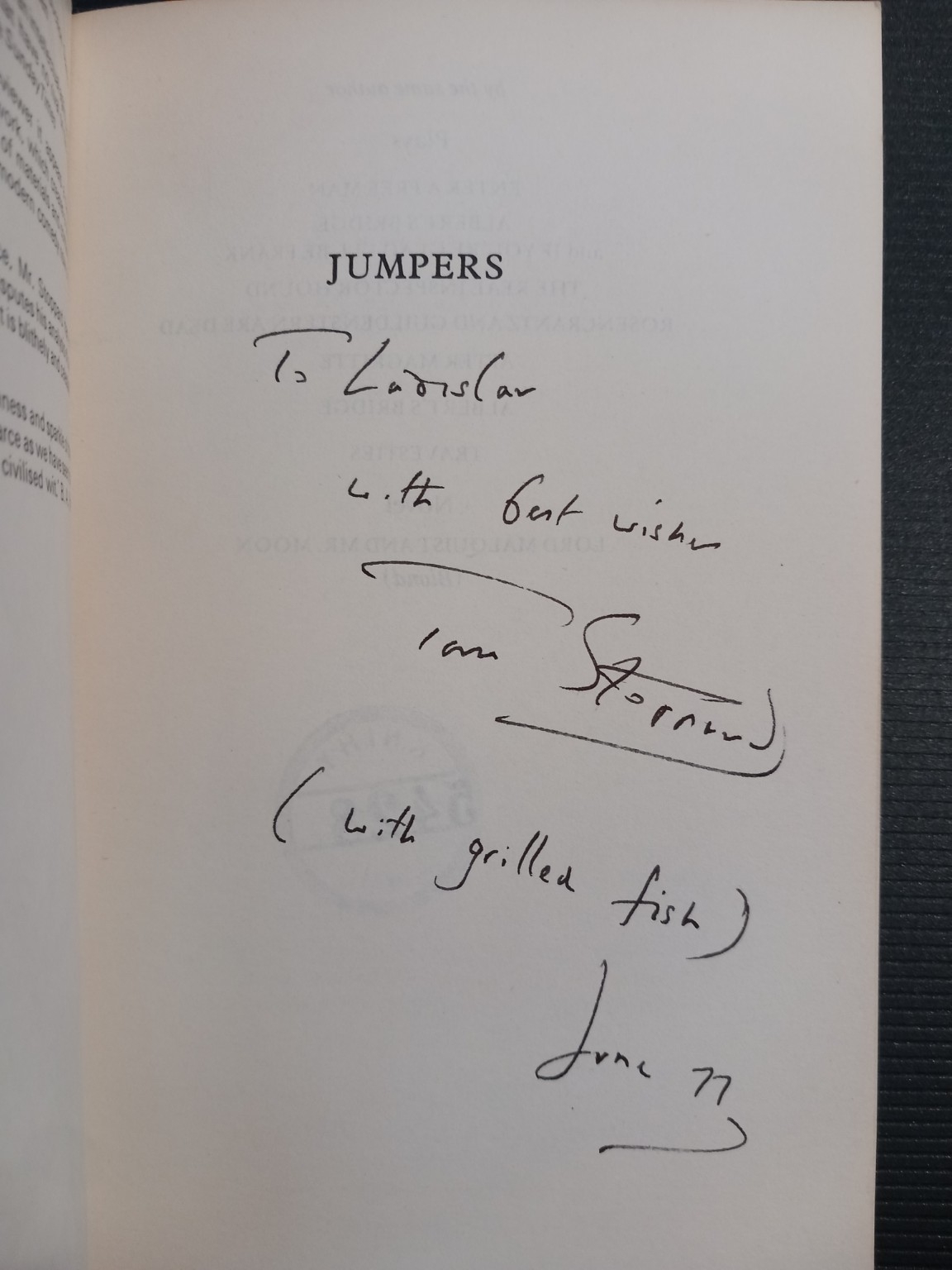
“With grilled fish”: Stoppard’s inscribed Jumpers from his clandestine 1977 Prague visit
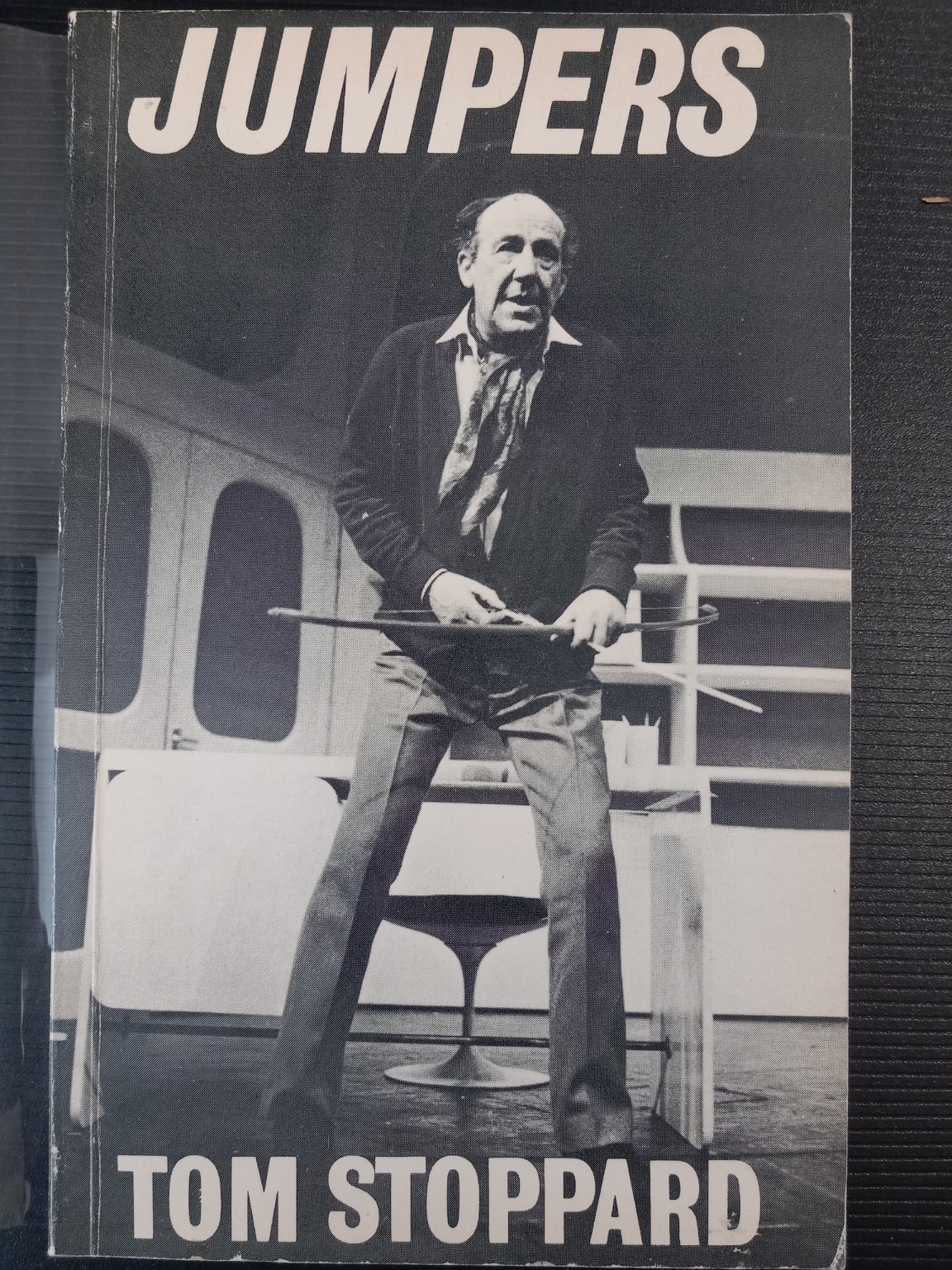
Stoppard, Tom. Jumpers. London: Faber and Faber, 1976. 8vo. 5th edition. 89 pp. Warm inscription referencing illicit meeting by the author to the Czech philosopher and dissident Ladislav Hejdánek on the occasion of Stoppard’s daring visit with Czechoslovak dissidents in June of 1977. “To Ladislav, with best wishes Tom Stoppard (with grilled fish) June 1977”. On June 18, 1977, Stoppard returned to Czechoslovakia for the first time since he and his family left it in 1938. For the "dissidents" it was a deeply symbolic occasion. Hejdánek later said that "...Stoppard's visit was an inspiration that lasted for the next two years." [Note: Alan Montefiore and Catherine Audard, Report on a Visit to Prague in August 1981, quoted in Barbara Day, The Velvet Philosophers, Claridge Press, London 1999.] When Stoppard arrived in Prague, he undertook a complex manoeuvre to lose the secret police, changing from one car to another outside Prague Castle and taking his seat next to the interpreter Gerry Turner (Turner modestly believes he was chosen for this honour because the Canadian Plastic People member Paul Wilson had been deported shortly before.) Stoppard met author and underground Publisher Ludvík Vaculík at the latter's home in the village of Všenory near Prague; to allow them to talk more freely, Vaculík took him to the railway station cafeteria in the neighboring village of Řevnice. At one point future prime minister Petr Pithart was present, as was Pavel Landovský. Stoppard met Ladislav Hejdánek "in a cheap 'fish shop' near Wenceslas Square", (hence the grilled fish reference in Stoppard’s inscription) as well as Pavel Kohout, Jan Vladislav and Karol Sidon. Importantly, Stoppard also met with Václav Havel for the first and only time in many years. Havel had just been released from prison the month before. Over the next two months, Stoppard wove the material into a long article published in the New York Review of Books, "Prague: The Story of the Chartists." [August 4, 1977] With an almost incomprehensible awareness of what life under a totalitarian regime meant, he combined everything he had learned about the origins of the Charter, Jan Patoček, and the Plastic People with his own experiences. Inv. Vyk1