Gallery
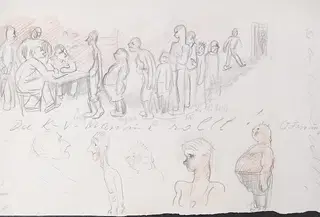
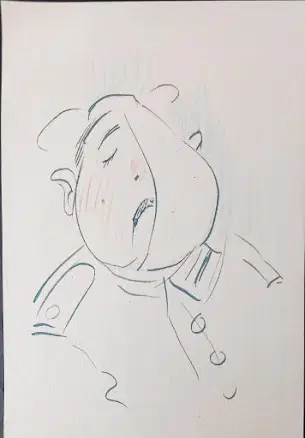
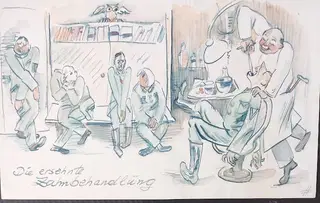
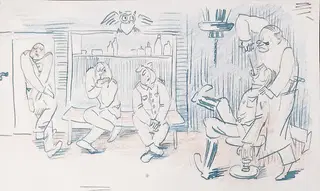
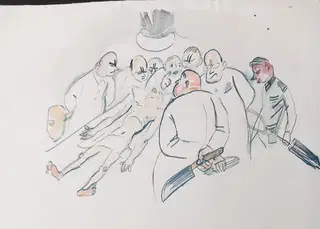
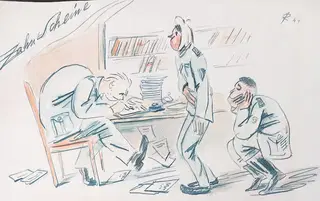
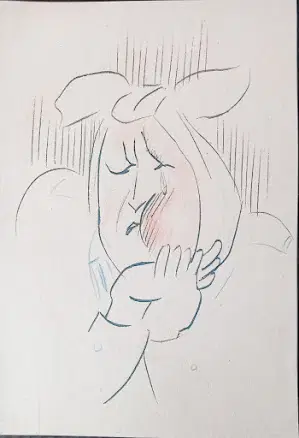
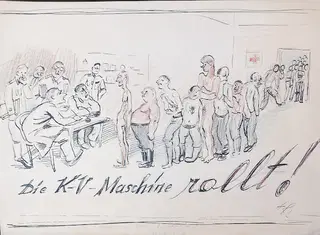
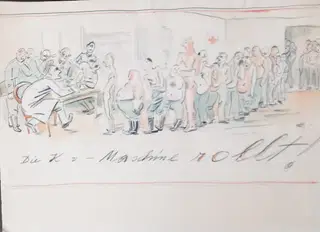
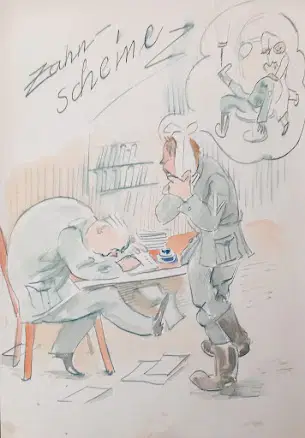
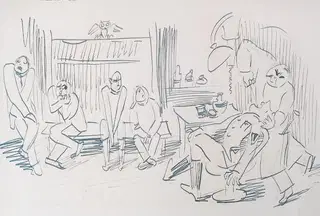
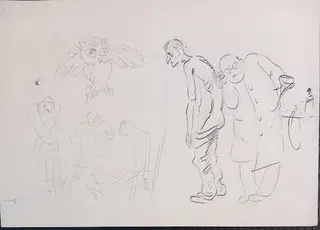
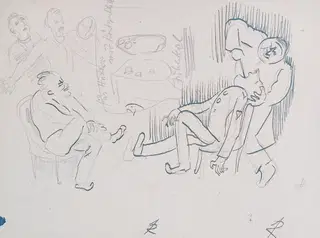
Watercolor caricatures of Nazi medical care
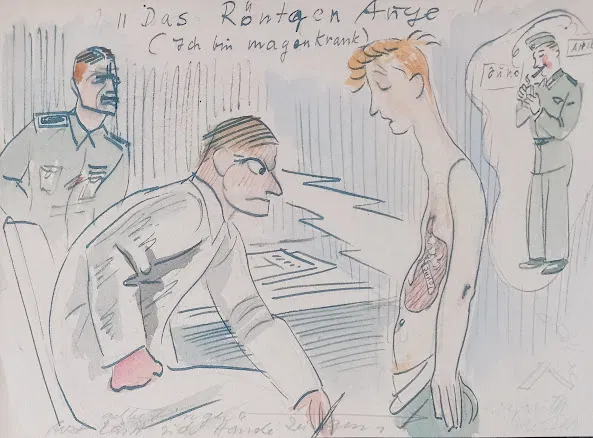
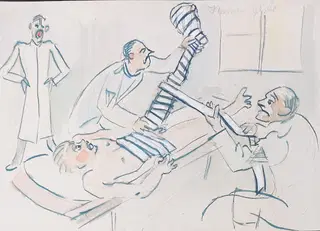
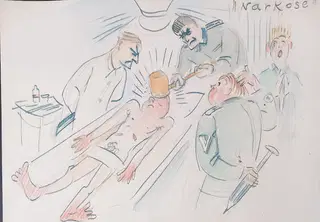
Nine watercolor drawings and and seven pen and pencil drawings by Alfred Rössler (1906–1982) satirizing the Kassenärztliche Vereinigung's brutal medical treatment of German soldiers during World War II. Rössler was a German artist known for his watercolor and gouache paintings of the 1940s and 50s. He was born in Gablonz (now Jablonec nad Nisou, Czech Republic) and later lived in Hamburg, Germany. The Kassenärztliche Vereinigung (KV), or Association of Statutory Health Insurance Physicians, was established in 1931 under an emergency decree by Chancellor Heinrich Brüning during the Weimar Republic. Its creation aimed to resolve conflicts between doctors and health insurance providers by replacing individual contracts with a unified system, leading to the formation of regional KVs across Germany. During World War II, the Kassenärztliche Vereinigung (KV), or the Association of Statutory Health Insurance Physicians, played a role within the German healthcare system under the Nazi regime. Originally founded to mediate between physicians and health insurance funds, it became increasingly integrated into the Nazi state's medical policies. By 1935, the KV's leadership underwent ideological training at the "School for Leadership of the German Medical Profession" (Führerschule der deutschen Ärzteschaft) in Alt Rehse. This training indoctrinated physicians with Nazi ideology, including racial hygiene theories and eugenics. Between 1935 and 1941, approximately 10,000 to 12,000 doctors attended these courses. The school later came under the direct control of the KV, further aligning the organization with the Nazi state's objectives. This series of drawings was recently featured at a Prague exhibition of Rössler's works from the late 1930 and early 1940s. Sizes of works: A4 oblong (2x), 10x15cm (2x), 15x21.5 (5) and16x25cm (7).
Inv BF2