Gallery
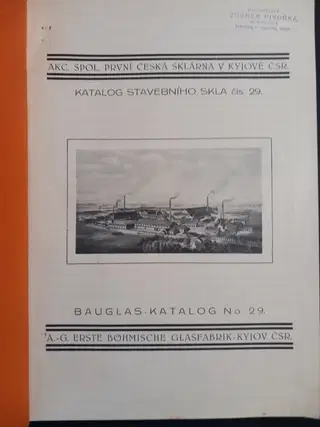
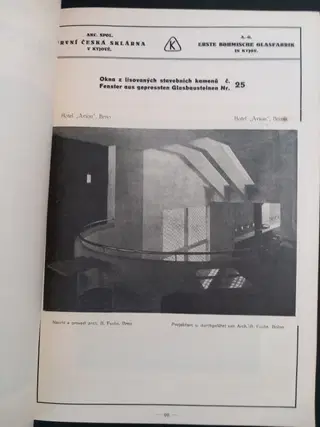
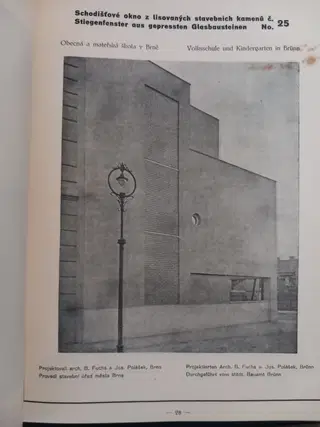
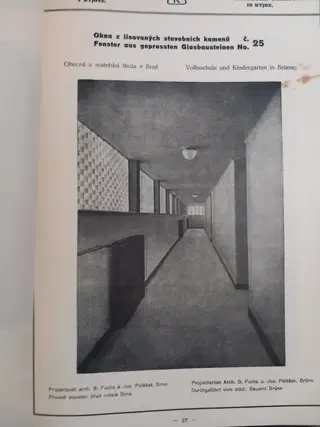
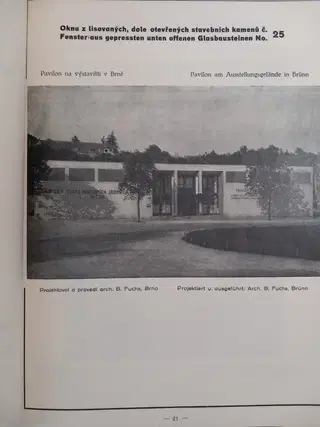
Kyjov Glassworks – Building Glass Catalogue No. 29. Bohuslav Fuchs, Hotel Avion
Kyjov Glassworks – Building Glass Catalogue No. 29. Bohuslav Fuchs, Hotel Avion, and Czech Functionalism.
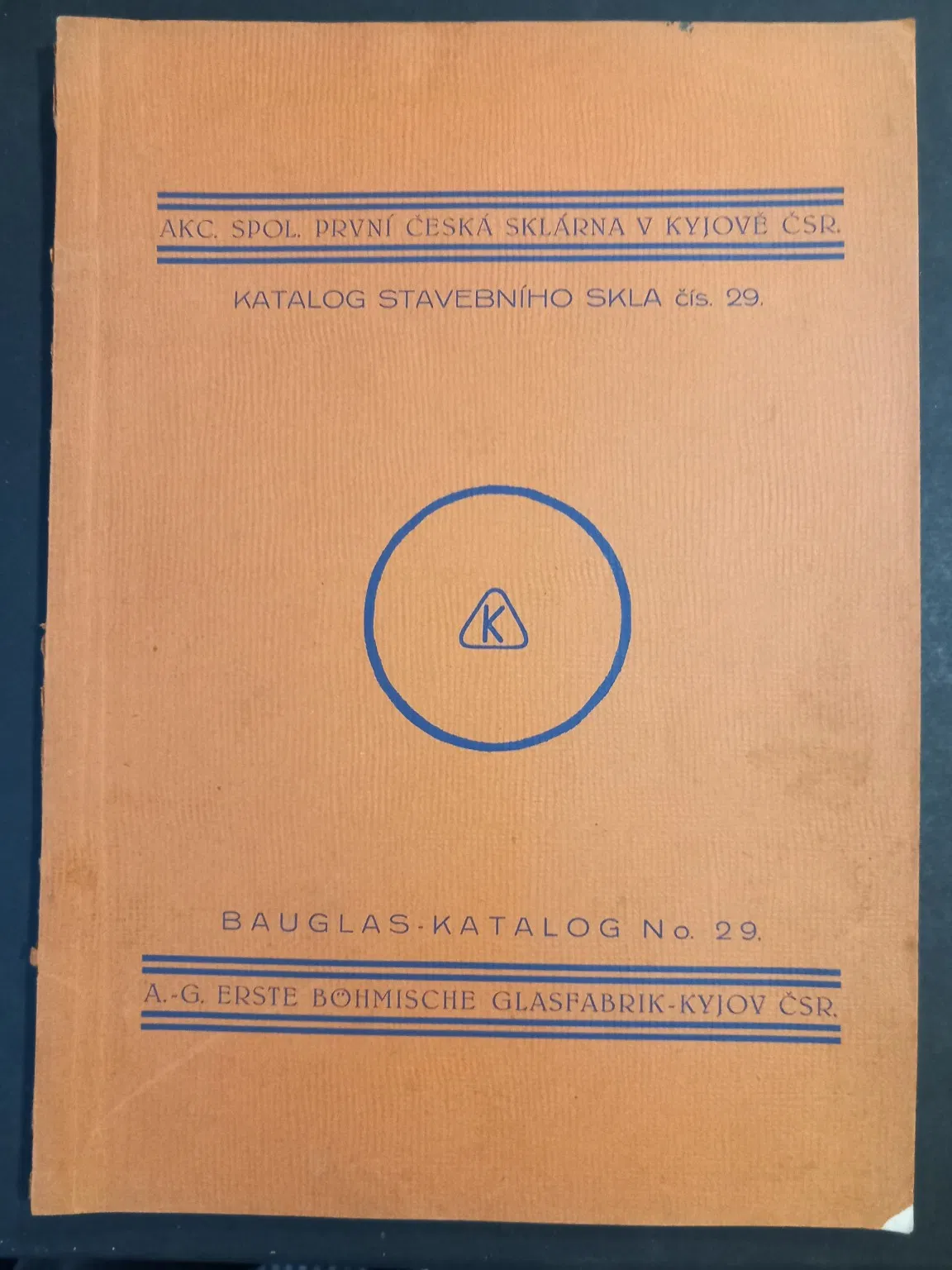
Akc. spol. První česká sklárna v Kyjově ČSR. Katalog stavebního skla č. 29. [First Bohemian Glassworks in Kyjov. Building Glass Catalogue No. 29.] Kyjov: Akciová společnost První česká sklárna, ca. 1930.
4to (29 × 21.5 cm). 35 single-sided leaves. Original printed wrappers. Good condition, with wear and light soiling to the original wrappers. Owner stamp of architect on title page.
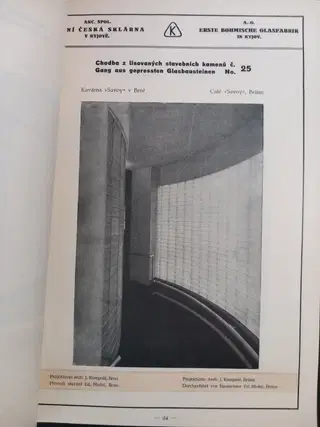
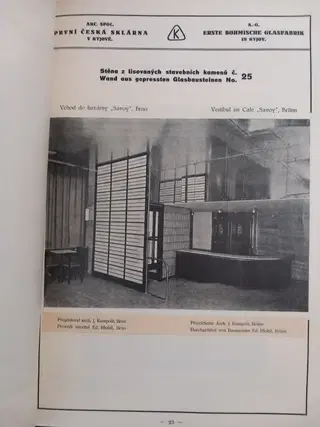
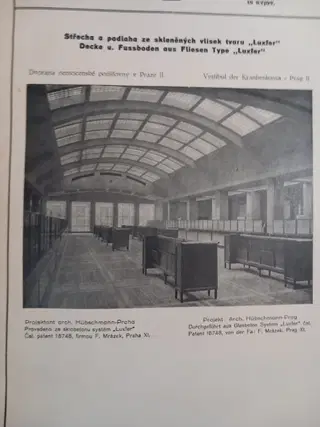
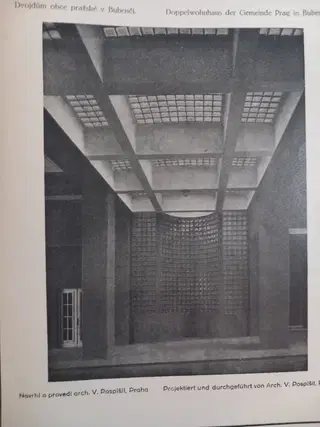
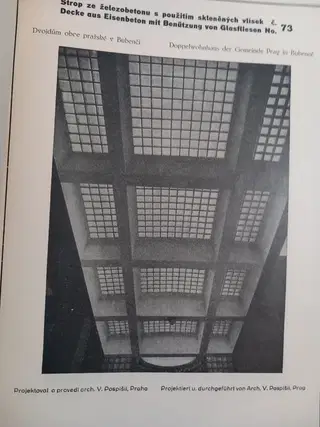
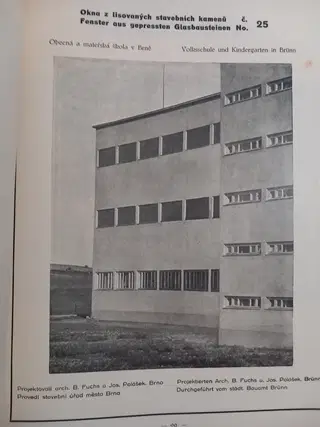
An important interwar trade catalogue issued by the First Bohemian Glassworks in Kyjov, documenting one of Czechoslovakia's leading manufacturers of pressed glass building blocks, glass tiles, and structural glazing. Printed in Czech and German, the catalogue combines technical specifications, construction diagrams, and numerous photographic illustrations of completed architectural projects employing the firm's products.
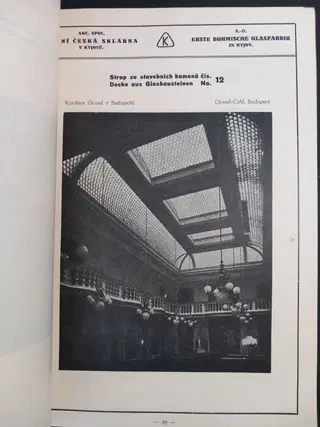
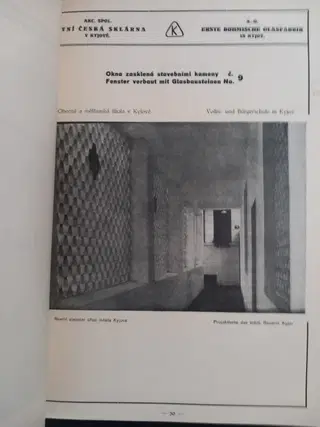
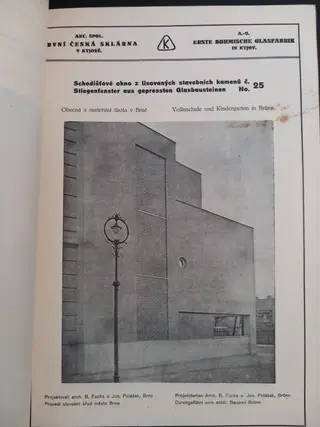
The catalogue is particularly noteworthy for its extensive documentation of buildings by Bohuslav Fuchs, one of the foremost architects of Czech Functionalism. Among the highlights is a photo of the interior of Hotel Avion, Brno (1927–28), Fuchs's internationally celebrated masterpiece, illustrating his innovative use of pressed glass blocks to introduce natural light into the hotel's famously narrow interior. Additional Fuchs projects include the Municipal and Kindergarten School in Brno, designed with Josef Polášek, where glass-block façades, stairwells, and interior light walls are extensively illustrated, as well as the Pavilion of the Union of National Unity at the Brno Exhibition Grounds.
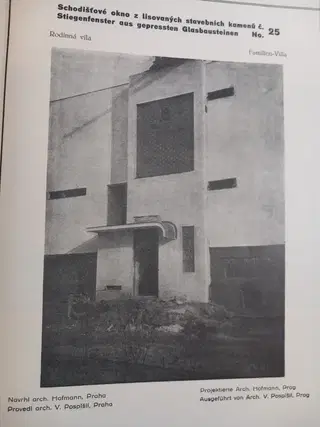
Further architectural examples include the Savoy Café, Brno by Jaroslav Kumpošt, reinforced-concrete glass ceilings by Václav Pospíšil in Prague, the Prague II District Health Insurance Building by Hubschmann, a Prague villa by Hofmann, the Grand Café in Budapest, and numerous public and private buildings throughout Czechoslovakia. Together, these photographs provide an exceptional survey of the adoption of structural glass in Central European modern architecture during the late 1920s and early 1930s.
Beyond its practical purpose as a manufacturer's catalogue, the publication is an important architectural document illustrating the close relationship between industrial innovation and the emergence of Czech Functionalism.

![Porcelaine de Ménage [Household Porcelain] Czechoslovak export catalogue](/_amplify/image?url=https:%2F%2Fmorganbooks.s3.eu-central-1.amazonaws.com%2Fmedia%2Fimages%2F1000053941.jpg&w=640&format=webp&q=75)