Gallery
Jutsu-hō: Methods for Painting Trees (樹法).
Anonymous (Japan, late Edo–early Meiji period).
Jutsu-hō: Methods for Painting Trees (樹法).
Kyoto, Japan: woodblock-printed painter’s manual, n.d. (circa 1840–1870).
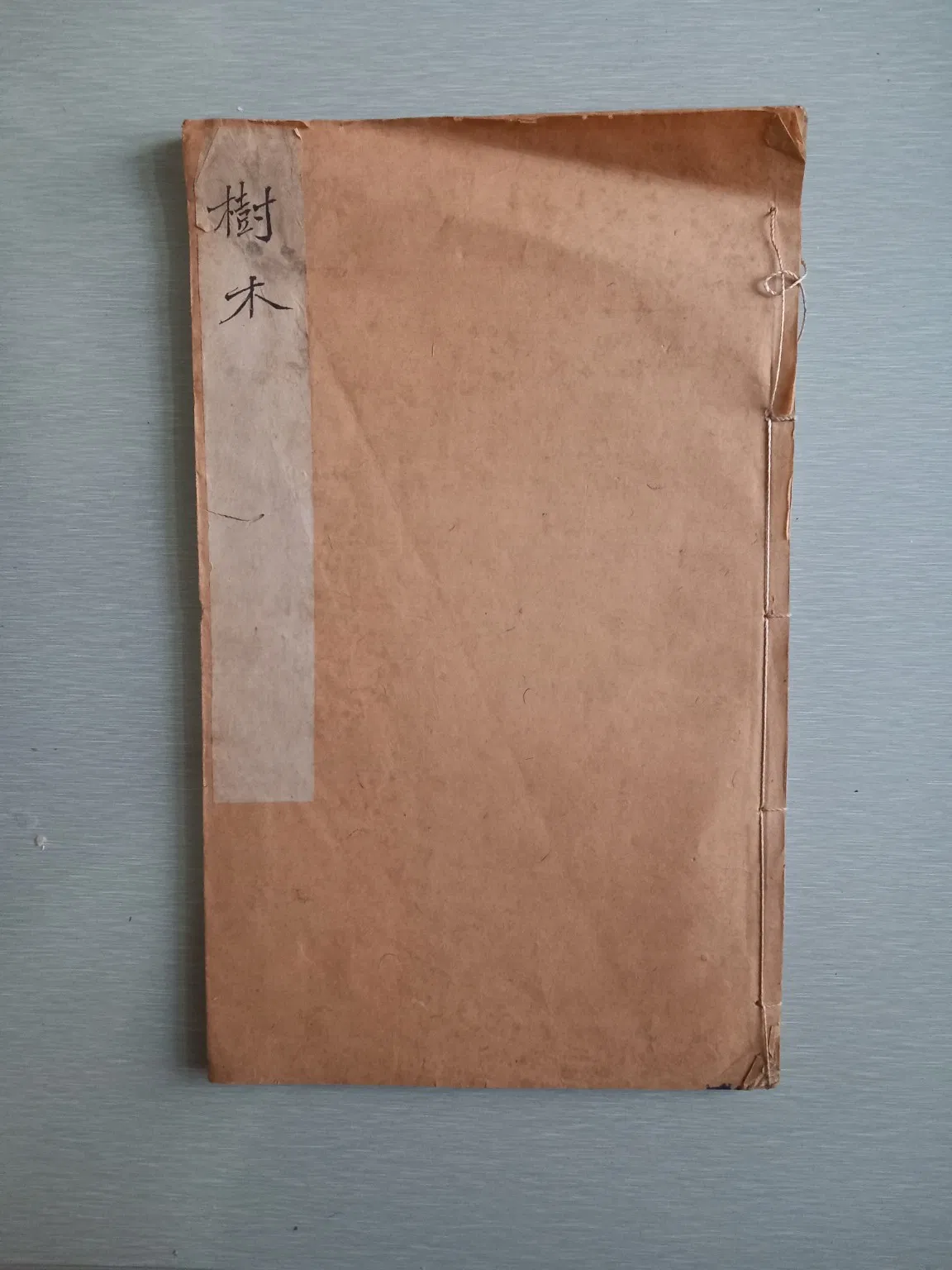
26.5 × 16 cm. Japanese-style stab-sewn booklet in plain tan paper wrappers with manuscript title-slip. Unpaginated, approx. 70 pp., printed on folded leaves.
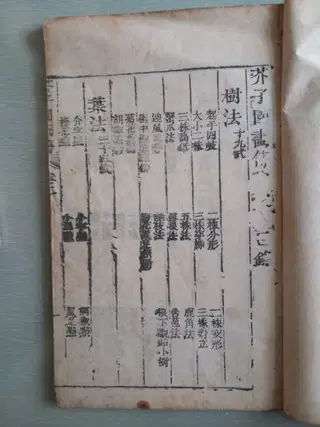
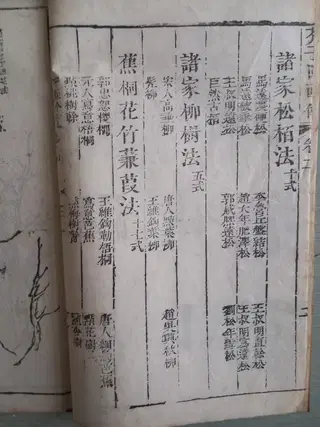
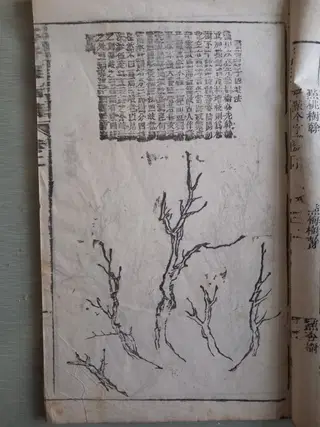
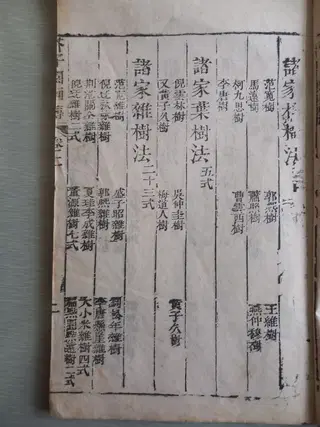
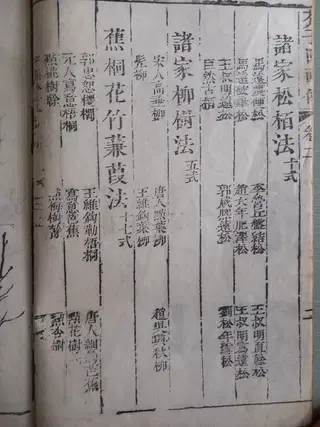
A finely printed Japanese painter’s instructional manual devoted entirely to the depiction of trees and foliage in brush painting, produced during the late Edo to early Meiji period and strongly rooted in the Nanga (Japanese literati) tradition. The text systematically presents dozens of classical tree-painting formulas, many attributed to Chinese Song- and Yuan-dynasty models, and organizes them into clearly defined sections such as Methods for Painting Pines, Methods for Painting Willows, Forest Composition Methods, and Miscellaneous Tree Forms. Further sections treat foliage-dot and leaf-stroke techniques, including paired-leaf structures, vine-hook brushwork, and small-leaf dotting methods, creating an extensive curriculum for studio practice.
The work functions as a painter’s training manual rather than a decorative picture-book: each tree type is broken down into stylistic “methods” (法), often naming the associated master or school (including Ma Yuan and Mi-family styles), followed by schematic examples and fully realized compositional studies. The manual therefore reflects the pedagogical ideals of Japanese literati painters who sought to internalise and transmit Chinese brush disciplines through structured repetition.
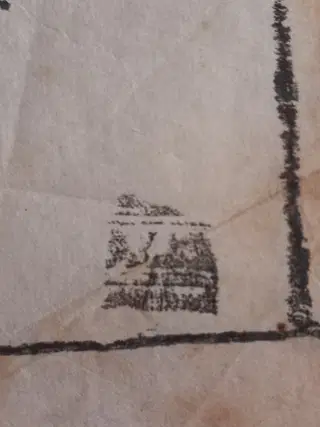
Woodblock-printed throughout within single-rule borders on handmade paper. A small publisher’s block appears at the foot of the final page, consistent with Kyoto printing houses of the mid-19th century.
Good condition. Occasional light toning and small stains; some expected unevenness of inking. Original plain wrappers lightly rubbed; a 3-cm closed tear to the rear cover. Sewing intact; contents complete.
A handsome and well-preserved example of a Japanese painter’s manual codifying Chinese literati brush practice.
Inv. Ho6